

Lessons from the Russia-Ukraine Conflict: Has the Success of Attack Drones Sounded the Death Knell for Armed Helicopters?
The success of attack drones and the failure of armed helicopters on the Ukrainian battlefield may not have sounded the death knell for rotorcraft, but they certainly warrant a reassessment.

a damaged Russian Ka-52 attack helicopter was shot down in Ukraine
In April 2022, a damaged Russian Ka-52 attack helicopter was shot down in Ukraine. Photo: X (formerly Twitter)
In February 2024, following the cancellation of the helicopter-based Future Attack Reconnaissance Aircraft (FARA) program and the announcement to cease production of the UH-60V Black Hawk by 2025, U.S. Army Chief of Staff General Randy George stated, “We are learning from the battlefield—especially in Ukraine—that aerial reconnaissance has fundamentally changed.” He added, “Sensors and weapons mounted on various unmanned systems and in space are more widespread, far-reaching, and cost-effective than ever before.”
At the same press conference, U.S. Army Futures Command General James Rainey remarked, “We are absolutely watching (events in Ukraine and Gaza) and adjusting, because we could be at war tonight, this weekend.” This announcement marks a significant reevaluation of the role helicopters previously played on modern battlefields as platforms for reconnaissance, combat, transport, and logistics.
What makes this reassessment even more noteworthy is that the FARA program was in its final phase after nearly two decades of searching for a replacement for the Bell OH-58 “Kiowa” observation, general-purpose, and direct fire support vehicle. It had reached the stage where the final shortlisted bidders, Sikorsky and Bell, were ready to test and evaluate prototypes: the Bell 360 and Sikorsky “Raider X.”
Sikorsky Raider X
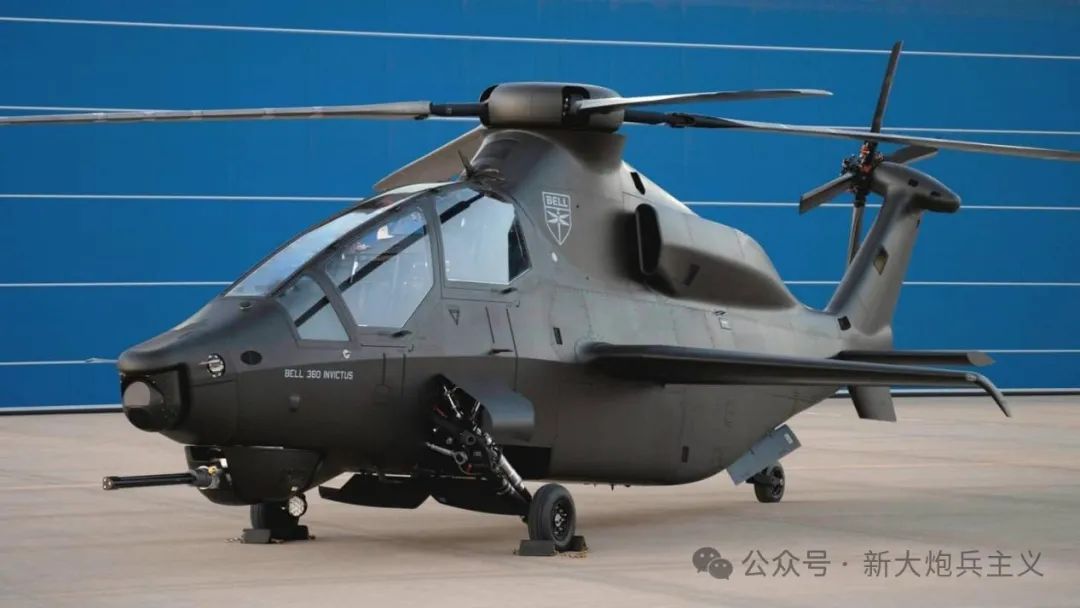
Bell 360
What prompted this sudden change in direction? Military commentator David Axe wrote in The Daily Telegraph when the U.S. Army made this announcement, “There’s been an absolute massacre among helicopter pilots on both sides… Helicopters are dying, and the Ukraine war is killing them.” Axe’s assessment was supported by data provided by the open-source analysis site Oryx and the International Institute for Strategic Studies (IISS). These figures indicated that Russia lost nearly 40% of its attack helicopters, including its latest Ka-52s (NATO: Hokum), and nearly 20% of its transport fleet, while Ukraine lost more than half of its already much smaller rotary-wing force.
The reason lies in the fact that military planners had not experienced a conventional war of the scale and scope triggered by Russia’s full-scale invasion of Ukraine. In particular, military strategists on both sides underestimated the impact of land-based air defenses on the modern battlefield. Former Ukrainian Defense Ministry advisor Serhiy Kuzan noted that the heavy losses and eventual failure of Russia’s massive helicopter assault on the Antonov Airport near Hostomel fully demonstrated this lesson. The operation during the first week of the offensive was intended to be the vanguard for an assault on the Ukrainian capital, less than 30 kilometers away. The Russian operation to seize Antonov Airport, also known as Hostomel, northwest of Kyiv, ended in complete disaster.
Douglas Barrie, a military aerospace consultant at the International Institute for Strategic Studies, told Defense News that the vulnerability of attack helicopters led to significant casualties, prompting Russian forces to change tactics and use long-range standoff weapons such as the Kh-39 air-to-surface missile—yet losses continued.
What Can Drones Offer That Helicopters Cannot?
The cancellation of FARA may free up billions of dollars for investment in Unmanned Aerial Vehicles (UAVs)—simply put, drones—many believe that, based on the experience in Ukraine, this will transform the battlefield. General Rainey believes that military aviation will still see pilots in the cockpit for the foreseeable future. He stated during the FARA announcement, “The requirement to conduct reconnaissance and security remains absolutely valid,” but ultimately it comes down to “how much risk you’re willing to take.” This will help determine whether manned or unmanned is the best solution.
The U.S. and other nations are focusing on developing Unmanned Combat Aerial Vehicles (UCAVs). They will perform all the functions helicopters once did: intelligence gathering, surveillance, target acquisition, and reconnaissance (ISTAR), as well as carrying air-to-air and air-to-ground missiles, and Anti-Tank Guided Weapons (ATGW). These drones are currently under real-time human control, but advancements in artificial intelligence will soon enable them to operate semi-autonomously or even fully autonomously in the future.
The kamikaze drones that once wreaked havoc on the Ukrainian battlefield will have a place, but future generations may also be AI-driven, launched in swarms from shipborne drones—what the U.S. Army refers to as “launch effects.”
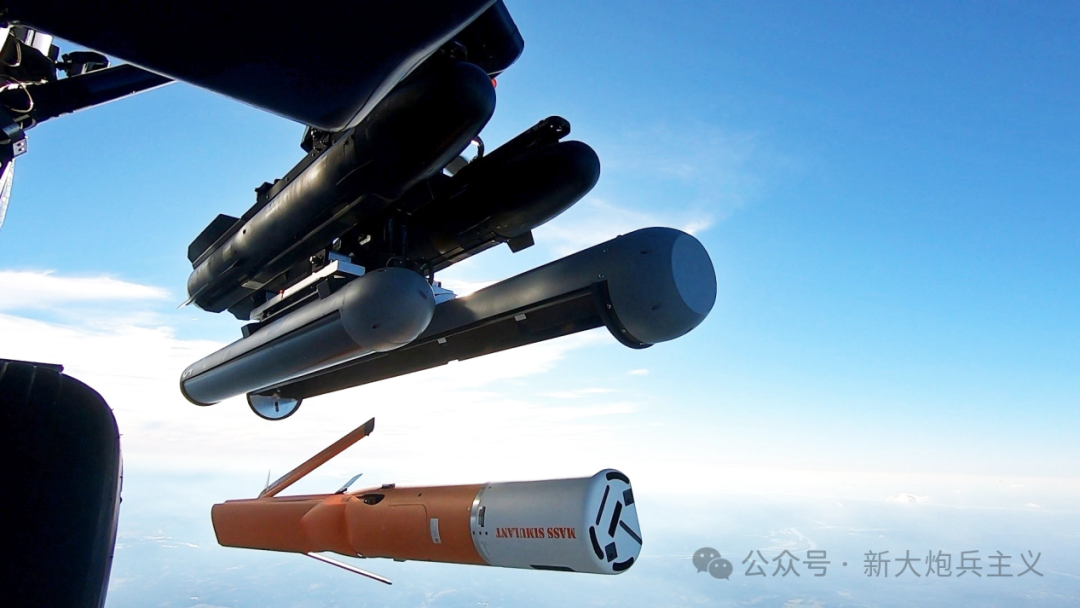
In December 2023, the Altius 700 drone conducted its first flight demonstration from a UH-60 Black Hawk helicopter. Photo: David Hylton/U.S. Army
And What About Helicopters?
Despite Axe’s grim assessment, rotorcraft are not yet obsolete, but their role will and must change in the future. By using long-range standoff weapons, like those employed by Russia, attack helicopters will become more survivable—in effect becoming air-launched tube-integrated unmanned systems like the Altius 700, a prototype “launch effects” drone dispenser currently being tested, mounted on the UH-60 Black Hawk helicopter. Helicopters can also serve as airborne controllers and relay stations for drones, extending and supplementing their operational range.
Helicopters may continue to play a crucial role on the battlefield as platforms for logistics, transport, troop insertion, and medical evacuation in hard-to-reach areas—although these roles may eventually be taken over by drones. Meanwhile, as General Rainey put it, “The future will depend on who can effectively integrate humans and machines correctly.”
So, while the emergence of new heavy armed platforms may be controversial, these new platforms resemble “aerial weapons platforms,” primarily relying on large fuel and weapon loads to maintain air superiority over the battlefield during cross-sea landing operations and using long-range weapons to strike armored targets in enemy counterattack forces. And after all, the Americans haven’t retired the Apache, have they?
