

A new chapter in personal mobility has begun. Alef Aeronautics, a Silicon Valley startup, has started trial operations for its Model A, an all-electric flying car, at Half Moon Bay Airport and Hollister Airport in California.
Unlike most concepts that have come and gone over the years, this isn’t just a flashy prototype on display — it’s the first flying car to enter real-world testing at active airports.
A Vision Ten Years in the Making
Alef Aeronautics was founded back in 2015 by a group of engineers and entrepreneurs who wanted to solve a problem almost everyone has faced: traffic congestion.
Their idea was simple but ambitious — build a car that drives like a normal vehicle but can also take off vertically when needed.
In 2017, Alef caught the attention of Tim Draper, an early investor in Tesla and SpaceX. His venture firm, Draper Associates, backed Alef with $3 million in seed funding.
Fast forward to 2022, and Alef unveiled its first Model A prototype. Within a year, it became the first flying car project to receive a Special Airworthiness Certification from the U.S. Federal Aviation Administration (FAA) — a crucial regulatory step that gave the company the green light to begin test flights.
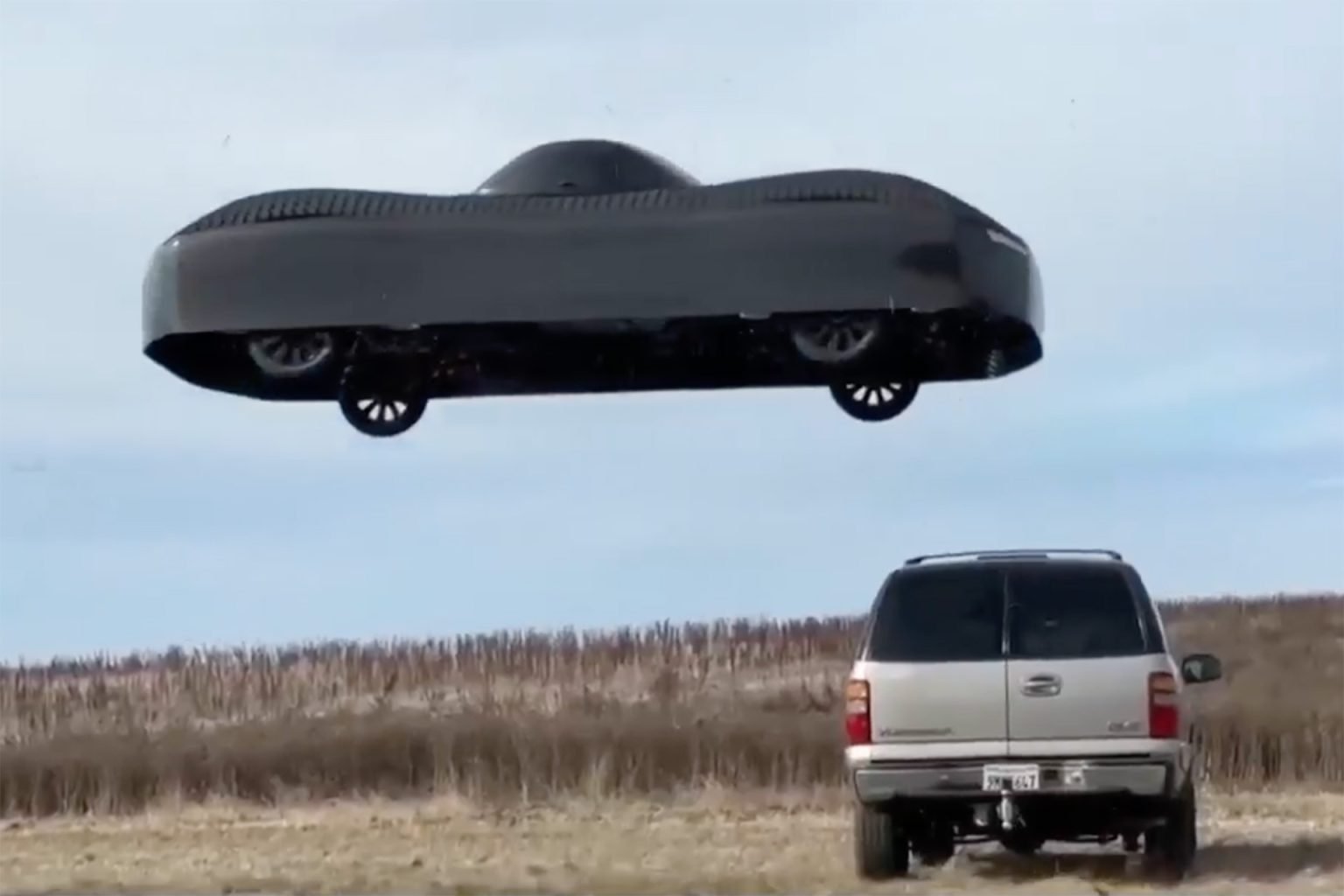
Alef Aeronautics Flying-Car First Flight
Driving, Flying, and Everything In Between
What makes the Model A unique isn’t just that it can fly. It’s that it’s designed to seamlessly switch between driving and flying without needing special infrastructure.
-
On the Road: Up to 220 miles (~354 km) on a full charge.
-
In the Air: Up to 110 miles (~177 km) of range with vertical take-off and landing (VTOL) capability.
-
Top Air Speed: Around 110 mph (~180 km/h).
-
Smart Design: The body tilts sideways during flight, effectively turning into a dual-wing structure while the cabin stays level.
-
Electric Powertrain: Eight motors provide distributed propulsion for safety and redundancy.
Back in February 2025, Alef released a demonstration video showing an “ultralight” version of the Model A driving down a road, rising above nearby traffic, and lifting off vertically.
For the first time, we could see a car on a road taking off into the sky — not in concept art, but in reality.
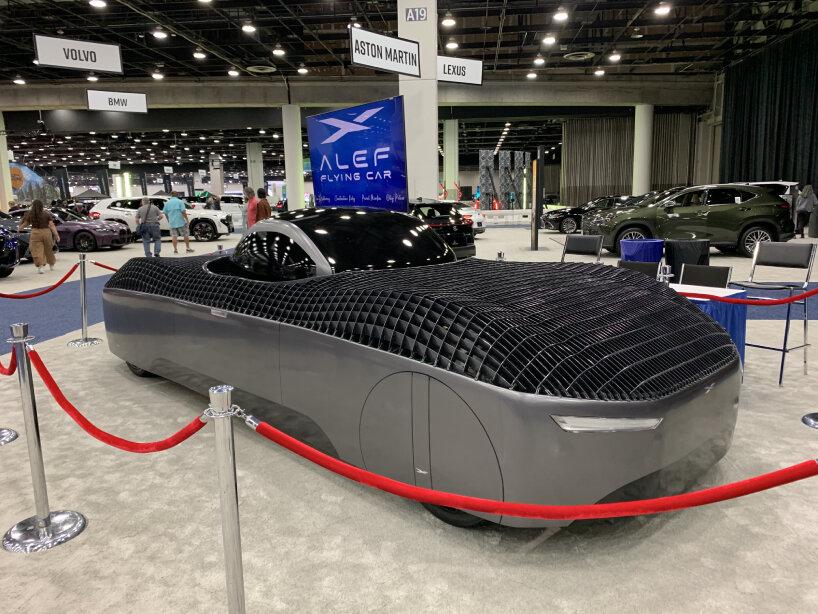
Alef Aeronautics Model A Flying Car on the Show
Real-World Testing Begins
To move beyond controlled demos, Alef has partnered with Half Moon Bay and Hollister airports for real-world testing.
The goal is to understand how the Model A performs under conditions closer to actual urban air mobility scenarios.
This includes:
-
Vertical take-off and landing in shared airspace
-
Integration with existing air traffic
-
Transitioning between driving and flight
-
Testing AI-assisted obstacle detection and flight stabilization
These early trials are a critical step toward answering the big question:
Can flying cars realistically share the skies with traditional aircraft?
Strong Demand Despite a $300K Price Tag
Alef has already taken over 3,300 preorders for the Model A.
-
Starting Price: Approximately $300,000 USD
-
Deposit Options:
-
$150 for a refundable reservation
-
$1,500 for priority delivery
-
-
Timeline: Pre-production models are being assembled now in California, and deliveries are expected to start in 2026.
Looking further ahead, Alef is developing a four-seater “Model Z”, expected to offer 400 miles of driving range and 200 miles of flight range. The company aims to launch it around 2035.
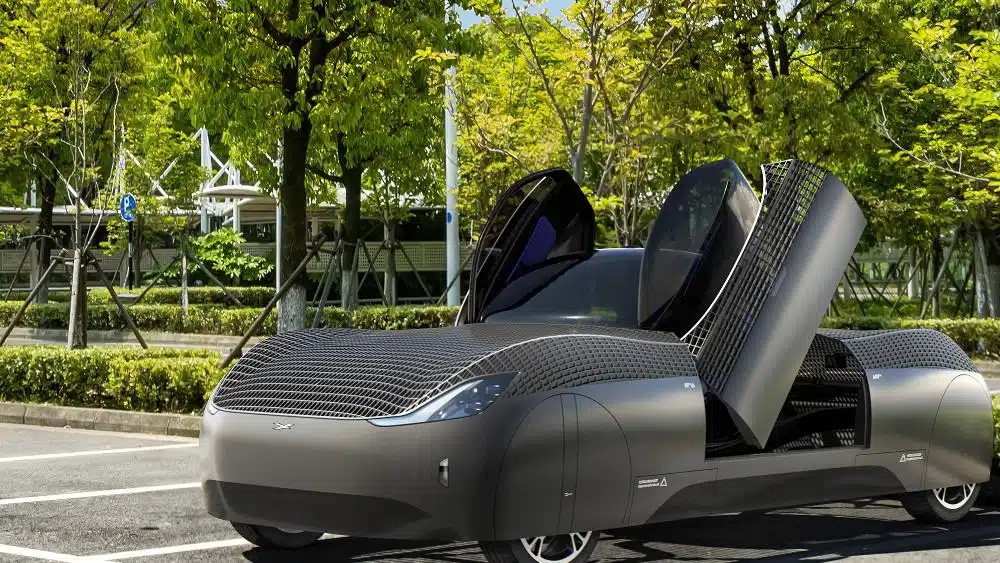
Alef Aeronautics Model A Flying Car on the Road
Flying Cars vs. eVTOL Air Taxis
While Alef’s flying car grabs headlines, it’s part of a much bigger urban air mobility (UAM) race.
Many companies — like Joby Aviation, Archer, and Hyundai’s Supernal — are building eVTOL air taxis designed to shuttle passengers between dedicated vertiports.
But Alef is taking a different path:
-
Personal Vehicle: Designed for private ownership, not fleet operations
-
Street-Legal: Can be driven like a normal EV when not flying
-
No Special Infrastructure Needed: You don’t need to wait for vertiports or air taxi networks
If it succeeds, the Model A could bridge the gap between today’s EVs and tomorrow’s personal aircraft.
Environmental Impact
Powered entirely by electricity, the Model A produces zero emissions in both driving and flight modes.
Alef claims that its energy efficiency is comparable to conventional EVs — and, in some situations, even better, since flying short distances can bypass congestion and reduce idle time.
Airmobi’s Take: The Road to Personal Air Mobility
At Airmobi, we’ve been closely following developments in urban air mobility while continuing to focus on industrial UAV solutions.
Our VTOL drone platforms are already enabling businesses to:
-
Perform large-scale aerial surveying
-
Deliver cargo over long distances
-
Support emergency response missions
-
Conduct industrial inspections with high efficiency
Flying cars like the Alef Model A are an exciting glimpse of what’s ahead, but the future is already here for many industries using heavy-lift UAVs and long-endurance drones today.
Final Thoughts
The Alef Model A isn’t just another prototype — it’s a real vehicle that has begun trial operations in California.
While there’s still a long way to go before flying cars become mainstream, Alef’s progress shows that the dream of road-and-air personal mobility is no longer science fiction.
And as companies like Alef, Joby, and Airmobi push boundaries in their respective fields, one thing is clear:
The future of transportation will be multi-dimensional — on the road, in the air, and everywhere in between.
