
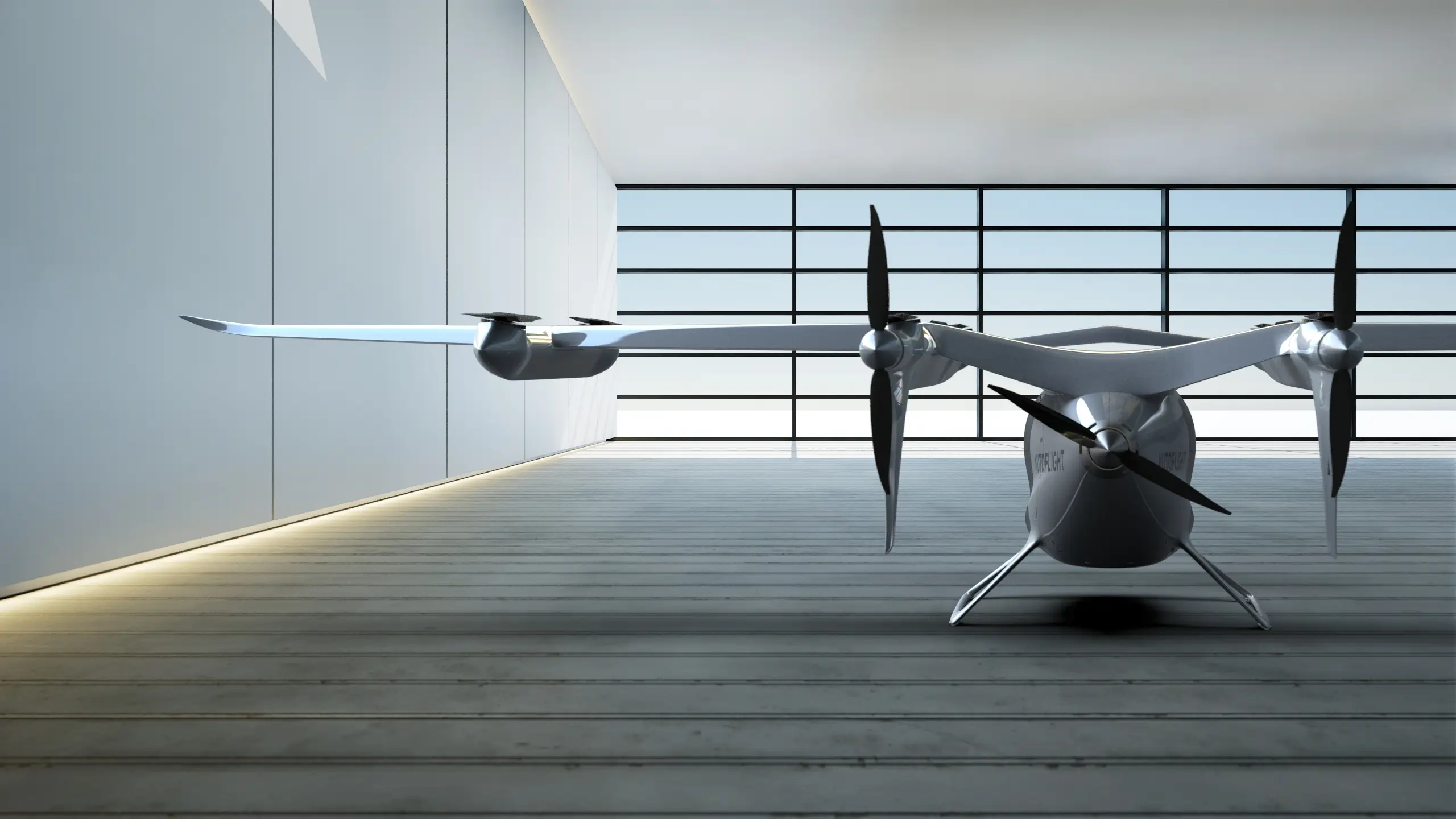
The year 2025 is widely regarded as the “first year of commercial eVTOL aviation”. Over the past six months, the industry has witnessed rapid advances in technological breakthroughs, regulatory milestones, and market expansion.
China, in particular, has demonstrated global leadership potential in areas such as airworthiness certification, scenario innovation, and supply chain maturity. Meanwhile, the reshaping of the international competitive landscape has opened up strategic opportunities for Chinese enterprises.
This article summarizes the Top 10 events from the first half of 2025 that are shaping the global eVTOL industry, providing valuable insights for professionals and stakeholders looking to identify structural opportunities and emerging challenges.
1. World’s First One-Ton Liquid Hydrogen Hybrid eVTOL Successfully Test-Flies
On January 9, China’s first 1-ton hybrid tiltrotor eVTOL powered by liquid hydrogen fuel cells completed its maiden test flight.
This marked the world’s first successful test flight of a ton-class hydrogen-powered hybrid tiltrotor eVTOL and the first application of a large-scale air-cooled hydrogen fuel cell system on a large aircraft.
This breakthrough addresses several long-standing technological bottlenecks, demonstrating the potential for clean energy applications in heavy-duty aviation. Leveraging liquid hydrogen technologies, policy support, and innovative use cases, China has positioned itself for a potential “leapfrog” in the low-altitude economy.
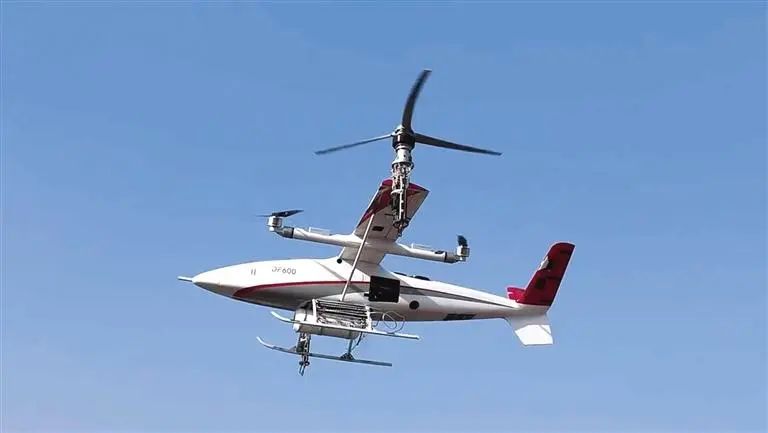
On January 9, China’s first 1-ton hybrid tiltrotor eVTOL powered by liquid hydrogen fuel cells completed its maiden test flight.
2. Autoflight V2000CG Wins World’s First eVTOL Production Certificate
In January, the East China Regional Administration of the CAAC awarded Autoflight the world’s first production certificate for the V2000CG, a 2-ton-class unmanned eVTOL system.
With certification secured, Autoflight plans to scale production capacity from 200 units per year in 2025 to 1,200 units per year by 2027.
This milestone reflects more than just corporate capability; it symbolizes China’s growing role as a global eVTOL rule-maker. The V2000CG is expected to become the “airborne freight truck” of future low-altitude logistics, bridging the gap between concept and commercialization.
Autoflight was awarded the world’s first production certificate for the V2000CG, a 2-ton-class unmanned eVTOL system.
3. Germany’s Lilium Declares Bankruptcy Again — A Cautionary Tale
In early February, German eVTOL pioneer Lilium filed for bankruptcy for the second time within six months.
Despite being once hailed as a market leader, Lilium faced failed financing rounds, frozen accounts, labor disputes, and unpaid wages, ultimately succumbing to commercial pressures.
This collapse underscores a critical lesson for the industry: technological idealism must be balanced with commercial pragmatism. Overly aggressive designs prioritizing range and speed without mature technology can lead to unsustainable business models.
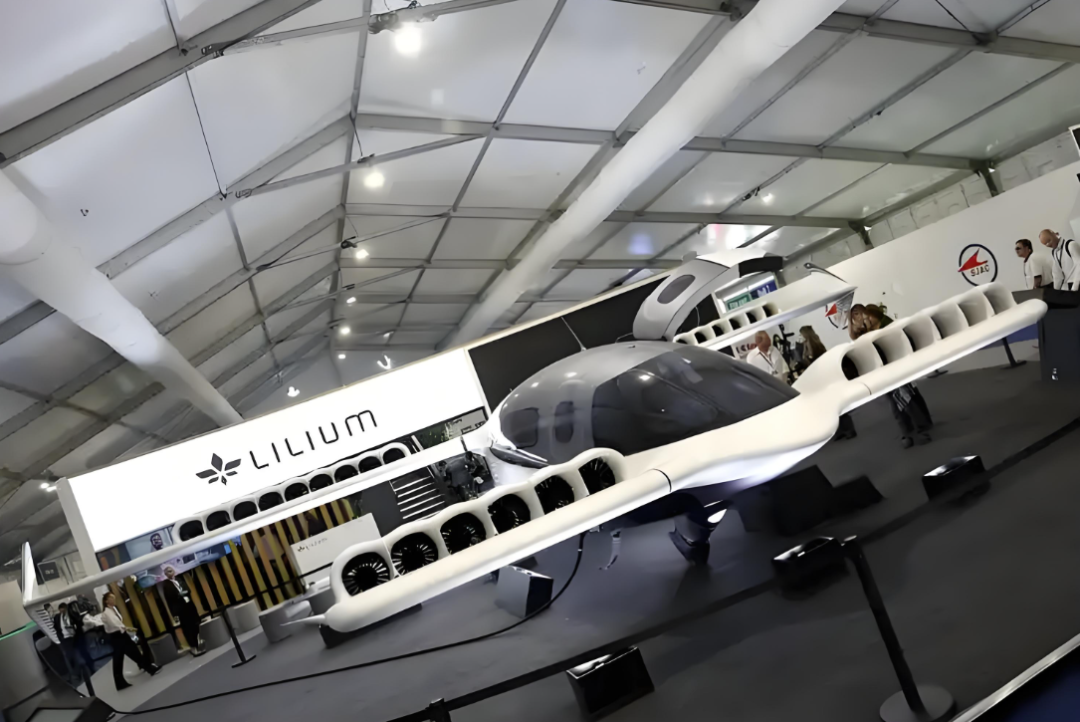
In early February, German eVTOL pioneer Lilium filed for bankruptcy for the second time within six months.
4. Shanghai’s Direct Investment in Tcab Tech Signals Local Commitment
In March, Tcab Tech completed its B+ funding round led by Shanghai Zero Bay Venture Capital and Zifeng Capital, bringing total financing to USD 100 million.
This marks the first direct state-owned investment in a complete eVTOL program since the release of Shanghai’s Low-Altitude Economic Development Action Plan (2024–2027).
Shanghai’s strategic focus on low-altitude tourism and intercity travel demonstrates growing government commitment to accelerating eVTOL commercialization and positioning the Yangtze River Delta region as a hub for next-generation aviation.
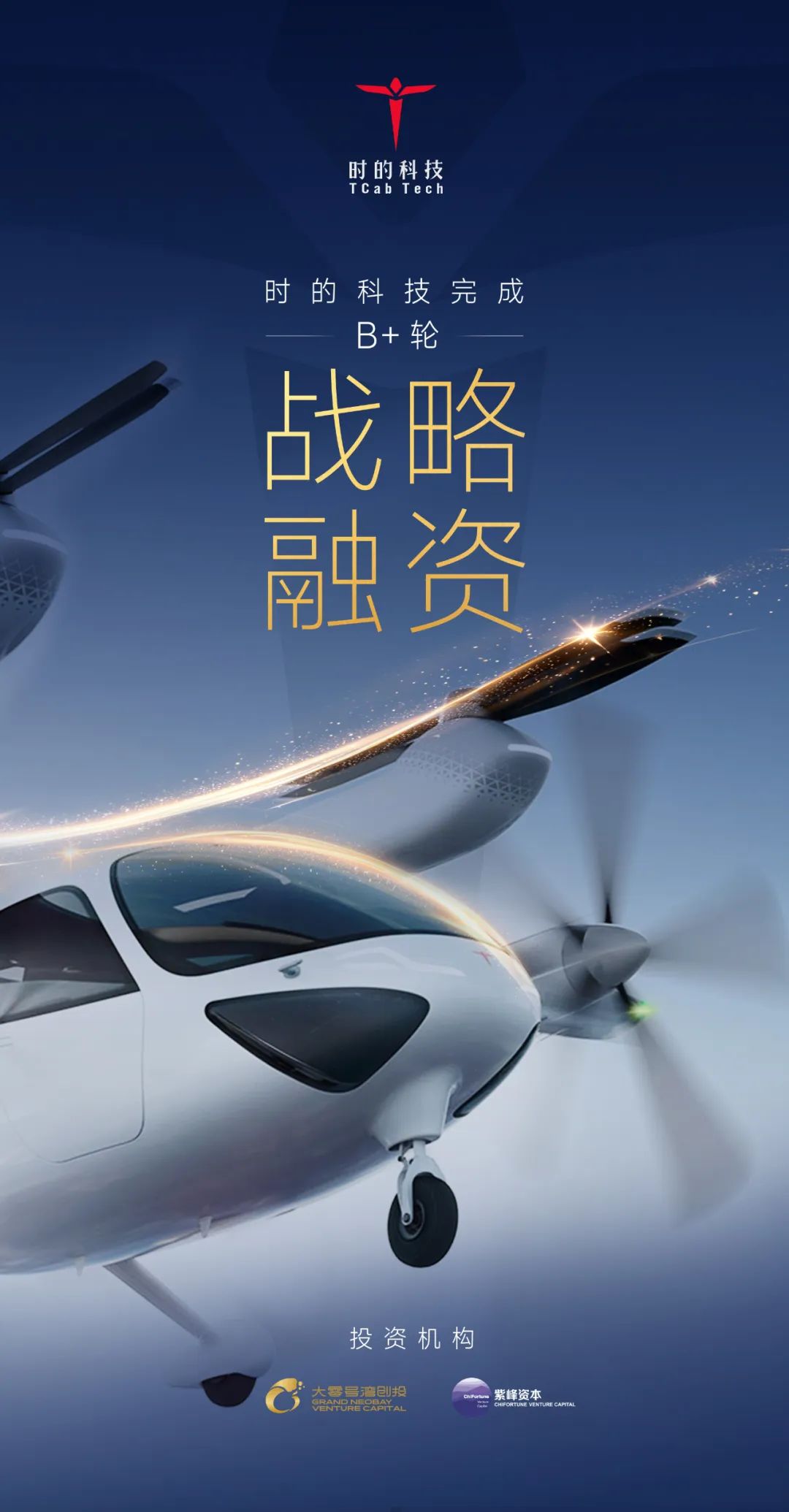
Tcab Tech Susccessfully completed its B+ funding
5. Wanfeng Auto Acquires Volocopter Assets — A “Global Tech + China Manufacturing” Strategy
In March, Wanfeng Auto Holding Group completed its acquisition of Volocopter GmbH’s key assets, including intellectual property, contracts, and manufacturing infrastructure.
By combining Volocopter’s certification expertise, Diamond Aircraft’s production capabilities, and Wanfeng’s extensive supply chain, the company aims to create a unique global competitive advantage that integrates European innovation with Chinese manufacturing power.
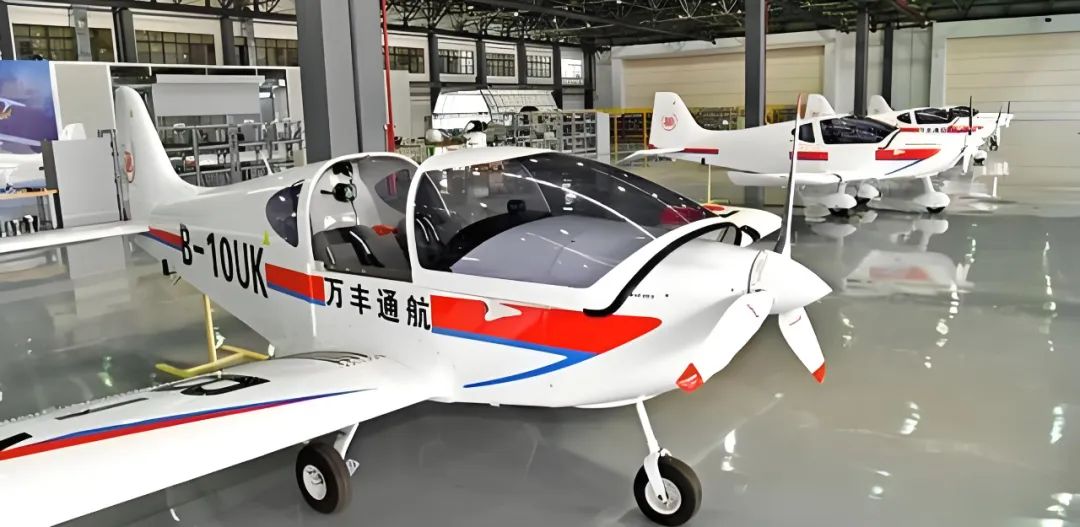
In March, Wanfeng Auto Holding Group completed its acquisition of Volocopter GmbH’s key assets, including intellectual property, contracts, and manufacturing infrastructure.
6. MIIT Releases Aviation Roadmap, Defining eVTOL’s Development Path
On March 27, China’s Ministry of Industry and Information Technology (MIIT) published the “Implementation Plan for Innovative Applications of General Aviation Equipment (2024–2030)”, outlining a clear roadmap for the sector.
By 2027, eVTOL-based applications are expected to achieve full commercialization across urban air mobility, logistics, and emergency response.
The plan also emphasizes regional demonstration projects in the Yangtze River Delta and Greater Bay Area, underscoring China’s strategic ambition to lead global low-altitude transportation innovation.
7. UASE Drone Expo Emerges as a Global Low-Altitude Economy Hub
From May 23–25, the 9th World Drone Congress & International Low-Altitude Economy Expo (UASE) took place in Shenzhen, attracting over 287,000 visitors, including 15,000+ international attendees.
From eVTOL aircraft and UAV platforms to AI-driven ground services and integrated low-altitude ecosystems, the expo showcased cutting-edge technologies and real-world applications, becoming a global benchmark for low-altitude economy development.

As a leading provider of long-endurance VTOL UAVs and communication systems, AIRMOBI leveraged the UASE platform to network with partners worldwide and explore collaborations on next-generation aerial logistics solutions.
8. Toyota Invests $250M in Joby Aviation, Accelerating Urban Air Mobility
In May, Toyota invested USD 250 million into U.S.-based Joby Aviation as part of an $894 million strategic partnership agreement signed in 2024.
The funds will support FAA certification and mass production of Joby’s five-seat eVTOL aircraft.
By combining Toyota’s automotive manufacturing expertise with Joby’s aviation technologies, the partnership is accelerating the convergence of automotive and aerospace sectors, reshaping urban air mobility’s commercialization pathway.
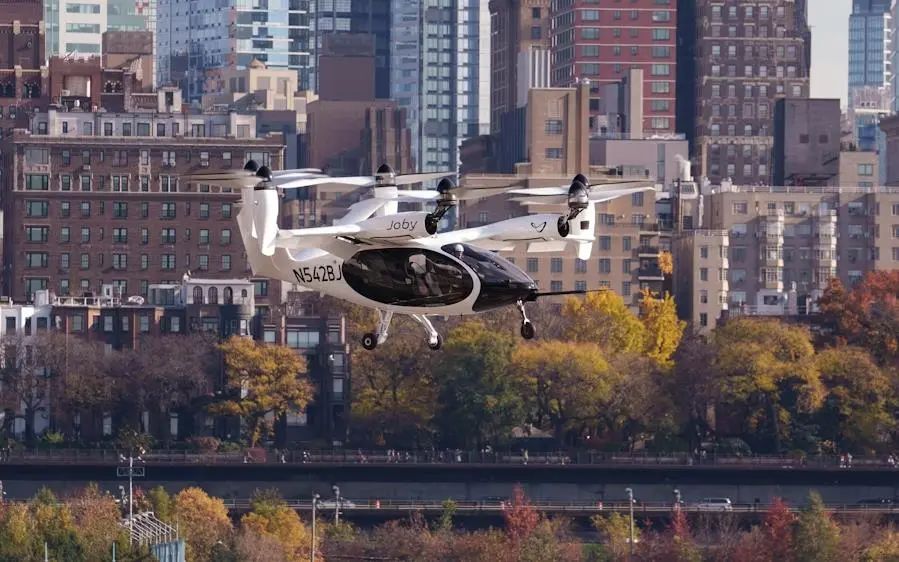
In May, Toyota invested USD 250 million into U.S.-based Joby Aviation as part of an $894 million strategic partnership agreement signed in 2024.
9. EHang EH216-S Achieves First Passenger Flight in Indonesia
In June, EHang announced the first passenger-carrying flight of its EH216-S autonomous eVTOL in Indonesia.
This achievement represents a major step toward building localized aerial mobility ecosystems in Southeast Asia. By addressing critical traffic demands and promoting green mobility, Chinese eVTOL companies are exporting both technology and ecosystem expertise to international markets.
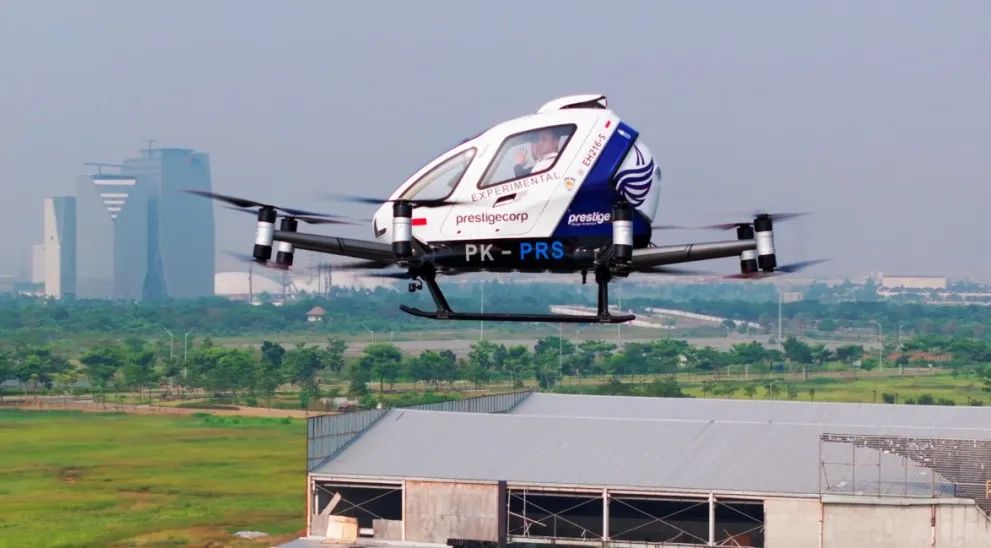
In June, EHang announced the first passenger-carrying flight of its EH216-S autonomous eVTOL in Indonesia.
10. U.S. Forms Five-Nation Alliance, Redefining Global eVTOL Certification Standards
Also in June, the United States joined forces with the U.K., Australia, Canada, and New Zealand to establish a joint alliance aimed at streamlining eVTOL certification across participating nations.
While this move introduces technical, regulatory, and market-access challenges for Chinese companies, it also offers an opportunity: by aligning Chinese airworthiness standards with international frameworks, China can accelerate industry upgrades and expand its global influence.
Outlook for H2 2025: Scaling Commercialization
The global eVTOL industry is entering a high-growth phase, driven by rapid technological innovation, regulatory support, and market demand.
Key variables for the second half of 2025 will include:
-
Airworthiness certification progress
-
Infrastructure deployment for low-altitude operations
-
Extended-range hybrid solutions overcoming endurance limitations
As a pioneer in industrial UAV platforms and long-range communication systems, AIRMOBI remains committed to enabling the next generation of aerial logistics and low-altitude economy ecosystems.
