
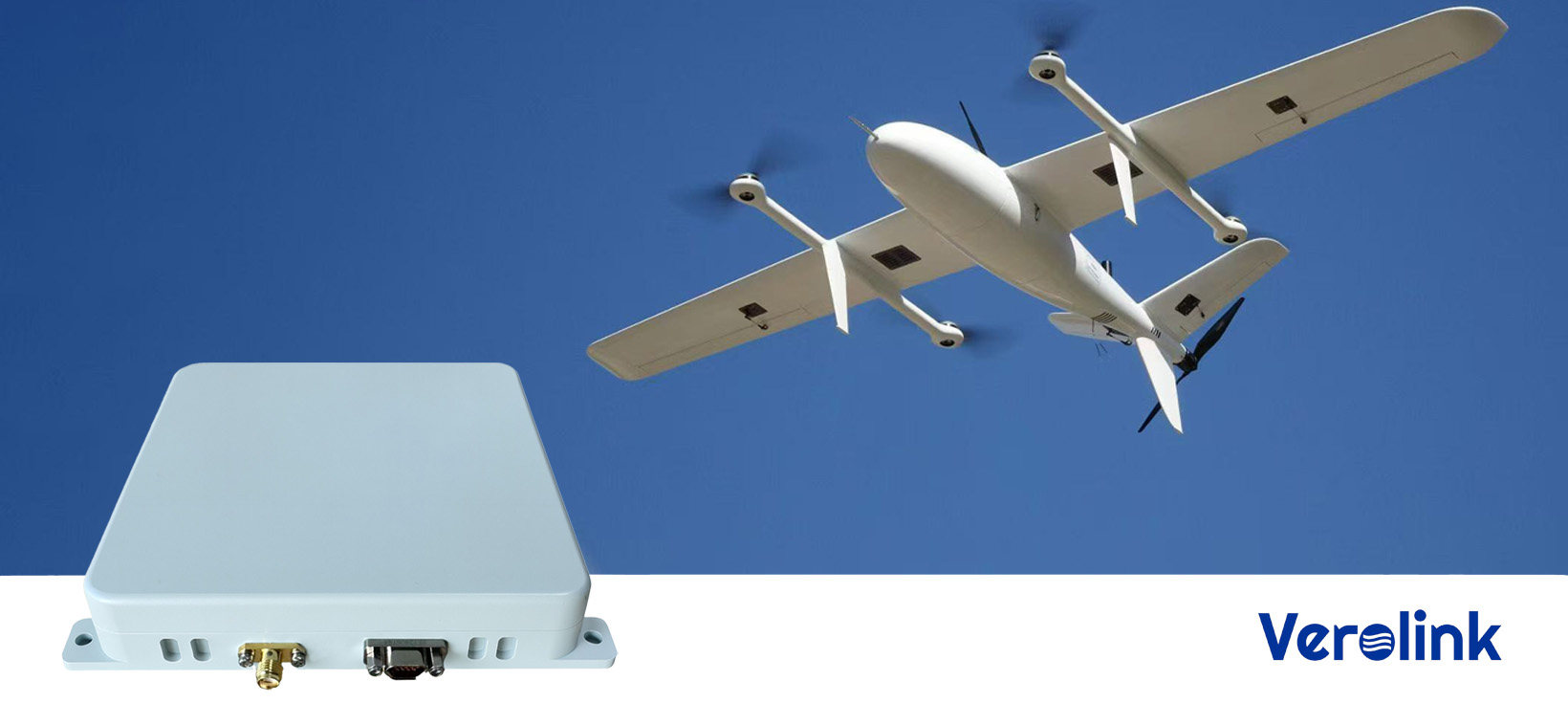
How Anti-Jamming GNSS Improves UAV Navigation Reliability – Using the Verolink VR009 as an Example
In most UAV platforms, GNSS is the primary source of positioning, navigation, and timing data used by the flight control system. Under ideal conditions, standard GNSS receivers are usually sufficient for basic navigation tasks. However, real-world UAV operations rarely take place in clean electromagnetic environments.
The Verolink VR009 anti-jamming GNSS receiver is designed for scenarios where GNSS reliability becomes a practical engineering concern rather than a theoretical one. As UAVs are increasingly deployed in urban areas, industrial zones, and long-range or autonomous missions, GNSS signals are often affected by RF congestion, high-power transmitters, and unintended electromagnetic interference.
In such conditions, conventional GNSS receivers tend to show degraded accuracy, unstable position output, or intermittent signal loss. These limitations may be acceptable for short-range manual flights, but they pose serious risks for professional UAV applications that rely on continuous and reliable navigation data. This is where anti-jamming GNSS technology begins to offer clear system-level advantages.
Standard GNSS and Its Limitations in Real UAV Operations
A conventional GNSS receiver is designed primarily to receive satellite signals and compute position. Its performance is closely tied to signal strength and signal-to-noise ratio. When interference enters the same frequency band, the receiver has limited capability to separate valid satellite signals from noise.
In practice, this means that once interference reaches a certain level, a standard GNSS module may exhibit position drift, intermittent fixes, or complete signal loss. For short-range manual flights, this may be tolerable. For long-endurance UAVs, VTOL platforms, or autonomous missions, the impact can be far more serious.
Standard GNSS works well when the environment is clean. It offers little protection when the environment is not.
How Anti-Jamming GNSS Addresses These Challenges
Anti-jamming GNSS receivers take a different approach. Instead of passively accepting all incoming signals, they actively suppress interference before it affects the navigation solution. This is typically achieved through a combination of antenna array techniques and dedicated anti-interference signal processing.
In practical UAV terms, the difference is not just higher accuracy, but continuity. An anti-jamming GNSS system is designed to keep providing usable positioning and timing data even when interference is present. This makes it particularly valuable for professional UAV applications where mission reliability is more important than peak performance under ideal conditions.
Integrated Anti-Jamming Design of the Verolink VR009
The VEROLINK VR009 Anti-Jamming GNSS Receiver is designed as an integrated solution for unmanned systems. It combines a multi-element antenna array, an anti-jamming processing module, and a dual-frequency GNSS receiver in a single unit. Compared with traditional GNSS antennas and receivers, this integrated architecture simplifies installation while significantly improving resistance to interference.
The VR009 supports multiple GNSS signals, including BeiDou-2 and BeiDou-3 (B1C and B3I) as well as GPS L1C/A. By operating across multiple frequency bands, the system can maintain stable navigation output even if one frequency band is affected by interference. In real deployments, this multi-frequency capability often proves critical in complex RF environments.
Practical Connection Methods in UAV Systems
From a system integration perspective, the VR009 can be connected to a UAV platform in two practical ways, depending on the platform architecture and upgrade requirements.
In a direct integration setup, the VR009 communicates with the flight control system through a low-frequency serial data connection. In this configuration, the internal GNSS module of the VR009 replaces the conventional GNSS receiver and antenna typically used on the UAV. Positioning data is transmitted directly to the flight controller using standard GNSS data formats, allowing the VR009 to function as the primary navigation source.
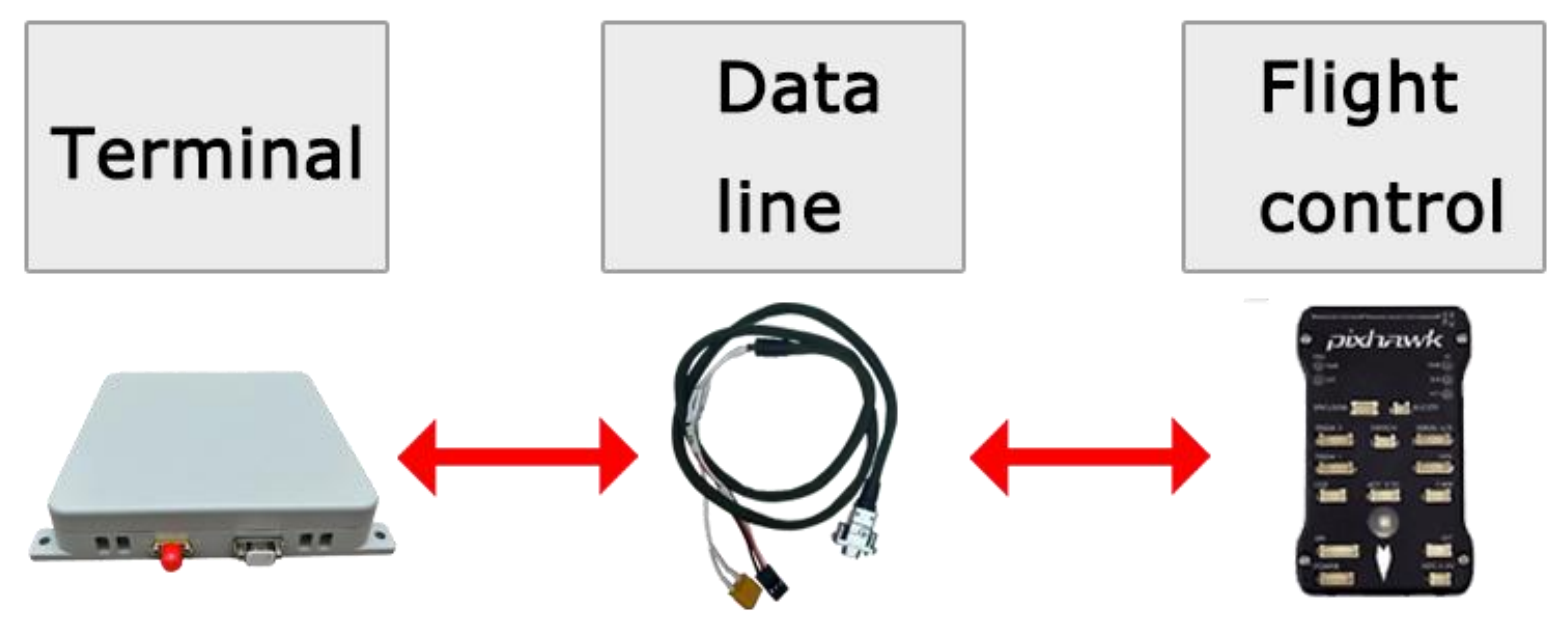
Diagram showing serial GNSS integration of the VEROLINK VR009 in a UAV system, where the receiver connects to the flight controller via a data cable and replaces a conventional GNSS module and antenna.
This approach is commonly used in new UAV designs or platforms where maximum anti-jamming performance is required and where the navigation system can be designed around the VR009 from the outset.
For existing UAV platforms, the VR009 also supports RF output mode. In this configuration, the device replaces a conventional active GNSS antenna while retaining the original GNSS receiver inside the flight controller or navigation module. Anti-jamming processing takes place upstream, and the filtered RF signal is delivered to the downstream GNSS receiver via an SMA interface.
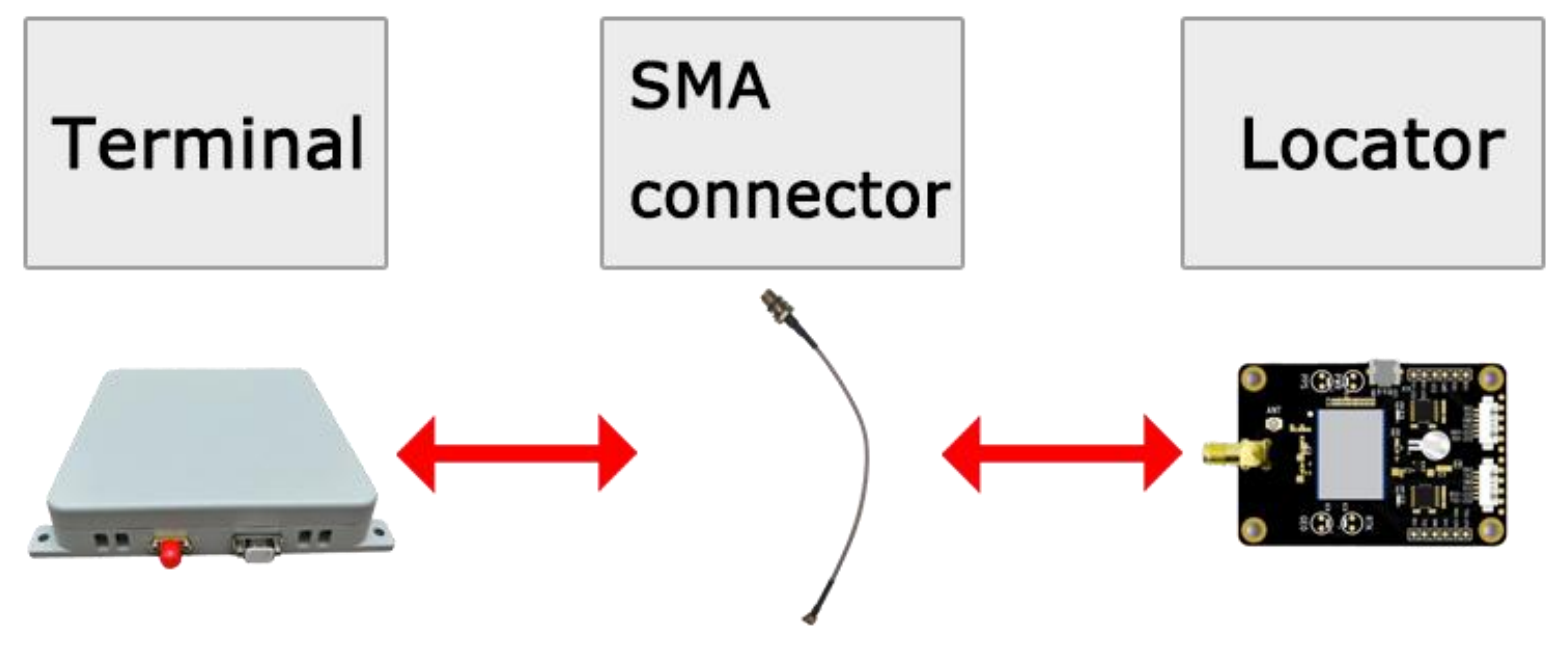
Figure 2. RF output mode: the VEROLINK VR009 replaces a conventional active GNSS antenna and feeds filtered RF signals to the existing GNSS receiver via an SMA interface.
This method provides a practical upgrade path for improving GNSS resilience without requiring major changes to the existing avionics architecture. When using RF output mode, care should be taken to ensure that the connected GNSS receiver does not supply more than 5 V bias voltage to the RF interface, as excessive bias voltage may cause power conflicts or damage.
Anti-Jamming GNSS vs Standard GNSS in System Design
When viewed from a system-level perspective, the difference between standard GNSS and anti-jamming GNSS is not simply performance, but design philosophy.
Standard GNSS assumes a relatively clean signal environment and focuses on accuracy under ideal conditions. Anti-jamming GNSS assumes that interference will occur and focuses on maintaining reliable navigation output when it does. For UAV designers and operators, this distinction becomes increasingly important as missions move beyond controlled test environments into operational deployments.
In many professional UAV systems, anti-jamming GNSS is no longer an optional enhancement, but a practical requirement for ensuring navigation continuity.
Installation and Handling Considerations
As with any professional avionics component, proper installation is essential for achieving optimal performance. The VR009 should be mounted with a clear view of the sky, supplied with stable power within the recommended voltage range, and installed with appropriate cable routing to minimize electromagnetic coupling.
When connecting the device to a computer using a USB-to-TTL adapter for configuration or testing, hot-plugging under power should be avoided to prevent potential damage to the serial interface. Following standard handling and integration practices helps ensure long-term reliability in UAV environments.
A Practical Path Toward More Reliable UAV Navigation
As UAV applications continue to expand into more demanding operational environments, GNSS reliability becomes a system-level concern rather than a component-level choice. Anti-jamming GNSS receivers provide a practical way to bridge the gap between laboratory performance and real-world operational reliability.
The Verolink VR009 demonstrates how integrated anti-jamming GNSS technology can be applied in professional UAV systems, offering flexible integration options and improved navigation robustness compared with standard GNSS solutions.
Product information:
https://www.airmobi.com/product/verolink-vr009-dual-frequency-anti-jamming-gnss-receiver/
